 |
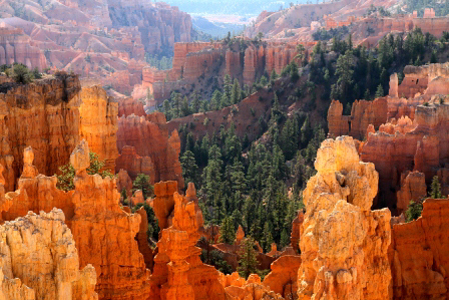
Bryce Canyon Glow Click on image to see more photos |
Bryce Canyon National Park
A Canyon Kaleidoscope
Located in southwestern Utah, Bryce Canyon National Park is a geologic masterpiece considered by many to be the most colorful of all the National Parks. Sometimes referred to as a forest of stone, Bryce is unique due to its thousands of delicately carved spires, called hoodoos, which rise in brilliant color from the canyon floor. Centuries of wind, water, and geologic mayhem have etched what was once mere sedimentary rock into towering rock pinnacles and immense amphitheaters. These superb formations stretch for miles along the eastern edge of the nine-thousand-foot-high Paunsaugunt Plateau. Evening and early morning light bring the brilliant hues of these formations to life, giving them a lustrous transparent glow.
With rim elevations that vary between 8,000 and 9,000 feet (2,400 to 2,700 meters), Bryce canyon transcends over 2,000 feet (650 meters) of elevation and three distinct climactic zones. This diversity of habitat provides for high bio diversity. Over 160 species of birds, dozens of mammals, and more than 1,000 plant species proliferate within the canyons and plateau that compose Bryce. While touring in the park one may see black bears, bobcats, coyotes, foxes, ground squirrels, marmots, mule deer, prairie dogs, pronghorn antelope, Rocky Mountain elk, and even possibly mountain lions. And should one care to search, one may find migratory hummingbirds, peregrine falcon, swifts, swallows,jays, nuthatches, ravens, eagles, owls, and California condors taking wing.
Bordering the rim of the canyon are ponderosa pines, high elevation meadows and fir-spruce forests, beyond which spread panoramic views of three states, up to 160 miles (260 km) distant. This area boasts some of the nation's best air quality, which, coupled with the lack of nearby large light sources, creates unparalleled opportunities for stargazing. Stargazers can see 7,500 stars with the naked eye, contrasted with the 2,000 or less that can be seen most other places.
Bryce’s namesake, Ebenezer Bryce, a Mormon pioneer who homesteaded in the area in the late 1800’s, described his namesake canyon as a "helluva place to lose a cow.” This remains true today, as the throng of intertwining slot canyons, spires, and hoodoos define a labyrinthine web that is exhilarating to explore.